Home prices rose a tad by 2.1% in 1Q 2011
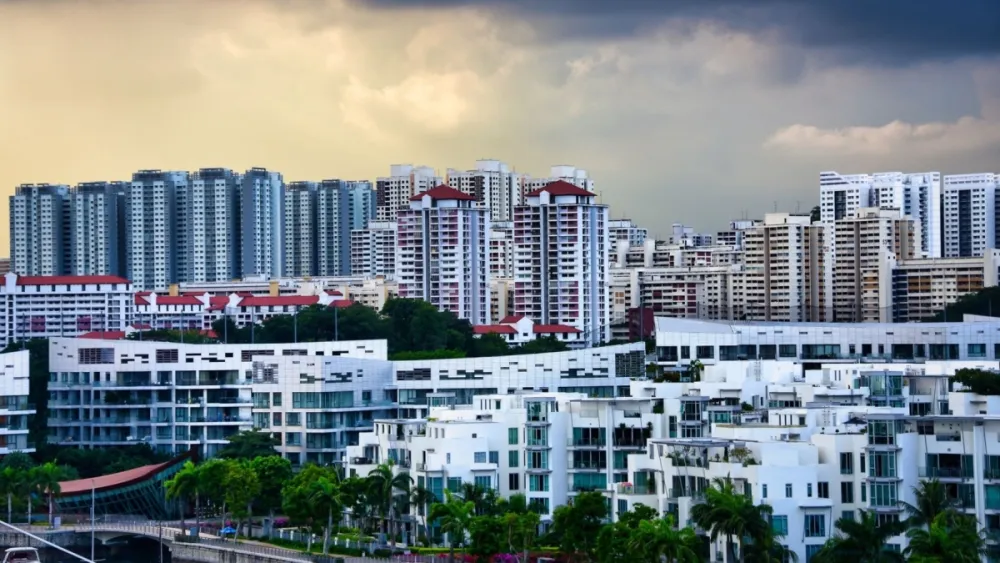
Property Price Index (PPI) showed that the overall price level in Singapore’s private residential property market reached 194.8 points in 1Q11.
According to URA, the rate of price increase has moderated for 6 consecutive quarters, since 4th Quarter 2009.
URA also released today the flash estimates of the price changes in the 3 geographical regions for 1st Quarter 2011. Prices of non-landed private residential properties increased by 0.9% in Core Central Region, 2.2% in Rest of Central Region and 3.1% in Outside Central Region in the quarter (see Annex B). In comparison, for 4th Quarter 2010, prices of non-landed private residential properties increased by 2.2% in Core Central Region, 1.9% in Rest of Central Region and 2.1% in Outside Central Region.
The flash estimates are compiled based on transaction prices given in caveats lodged during the first ten weeks of the quarter supplemented by information on the number of new units sold. The statistics will be updated 4 weeks later when URA releases the full 1st Quarter 2011 real estate statistics, when more data on the caveats lodged and the take-up of new projects are captured. Past data have shown that the difference between the quarterly price changes indicated by the flash estimate and the actual price changes could be significant when the change is small. The public is advised to interpret the flash estimates with caution.
In a statement, Jones Lang LaSalle said, when compared to a year ago, island-wide price growth has moderated. In 1Q10, the PPI saw an
increase of 5.1% which came on the back of a surge in price growth in 3Q09 and 4Q09 of 15.9% and 7.4%, respectively. In comparison, an increase in the PPI of 2.1% in 1Q11 is more moderate and more in line with the previous two quarters growth of 3.1% and 2.7%, respectively.
Jones Lang LaSalle also added, overall the URA Property Price Index (PPI) has shown a slow down in price movement both on a quarterly
and annual basis. From the slower rate of growth, we reckon prices will likely remain relatively stable going forward. While the overall market has slowed, the story is a little different within each submarket.
Dr Chua Yang Liang, Head of Research South East Asia says “The recent quarterly and annual growth in PPI for the OCR have softened remarkably compared to a year ago i.e. from 4.3% q-o-q and 25.7% y-o-y recorded in 1Q10 to 3.1% q-o-q and 13.1% y-o-y in 1Q11. Short term (i.e. quarterly) price fluctuations are likely to continue and be shaped by short term housing needs and by the existing policy impact as it continues to work into the system. The price movement in the mid to long term is more likely to slow and remain at a healthy pace mirroring that in the real economy.”
CBRE Executive Director, Li Hiaw Ho also commented, the slowdown was also reflected in the sales momentum of new launches where an estimate of 3,200–3,400 were sold in the first three months of the year. Although this is 20.0%–25.0% lower than the 4,241 units sold in the fourth quarter of 2010, it was still a very healthy volume.
Hiaw Ho added, URA said prices of non-landed private homes in the Outside Central Region (OCR) led the increase with a hike of 3.1%. This could be supported by projects like Waterfront Isle (median price $990), The Lakefront Residences ($1,050 psf) and The Tennery ($1,200 psf) which also registered a strong take-up during the quarter. These projects attracted homebuyers mainly because of their proximity to either an existing or future MRT station. Part of the increase could also be attributed to landed home prices which are still on the rise because of the smaller supply. Prices in the Rest of Central Region (RCR) showed an increase of 2.2% which could be attributed to Spottiswoode 18 ($2,000 psf), The Cape ($2,000 psf) and projects with small-format units like Palmera East ($1,255 psf). In the Core Central Region (CCR), where the sales volume was thinner, a marginal increase of 0.9% was recorded.
Looking to the second quarter, the property measures will continue to work through the residential market to regulate both sales volume and home prices. Demand for housing will be around 3,000-3,500 units as home prices stabilise further.”



![SBR 5 Lorem Ipsum News 2 [8 May]](https://cmg-qa.s3.ap-southeast-1.amazonaws.com/s3fs-public/styles/exclusive_featured_article/public/2025-05/a_hand_pointing_to_a_futuristic_technology_5b87c9d0e3_3.png.webp?itok=M3Hf-9XR)
![SBR 4 Lorem Ipsum [8 May Top Stories]](https://cmg-qa.s3.ap-southeast-1.amazonaws.com/s3fs-public/styles/exclusive_featured_article/public/2025-05/a_hand_pointing_to_a_futuristic_technology_5b87c9d0e3_2.png.webp?itok=2m5Wl0MX)


![Exclusive three SBR 12 Lorem Ipsum [8 May]](https://cmg-qa.s3.ap-southeast-1.amazonaws.com/s3fs-public/styles/exclusive_featured_article/public/2025-05/a_hand_pointing_to_a_futuristic_technology_5b87c9d0e3_11.png.webp?itok=8kn_UIfA)
![Video [Event News]](https://cmg-qa.s3.ap-southeast-1.amazonaws.com/s3fs-public/styles/event_news_featured_article/public/2025-05/screenshot-2025-05-08-at-4.58.53-pm_0.png.webp?itok=Kud35sMs)
![Event News SBR 9 Lorem Ipsum [8 may]](https://cmg-qa.s3.ap-southeast-1.amazonaws.com/s3fs-public/styles/event_news_thumbnail/public/2025-05/a_hand_pointing_to_a_futuristic_technology_5b87c9d0e3_8.png.webp?itok=DTh_dbYp)
![Event News SBR 9 Lorem Ipsum [8 May]](https://cmg-qa.s3.ap-southeast-1.amazonaws.com/s3fs-public/styles/event_news_thumbnail/public/2025-05/a_hand_pointing_to_a_futuristic_technology_5b87c9d0e3_7.png.webp?itok=vzDAzb6V)
![Event News SBR 8 Lorem Ipsum [8 May]](https://cmg-qa.s3.ap-southeast-1.amazonaws.com/s3fs-public/styles/event_news_thumbnail/public/2025-05/a_hand_pointing_to_a_futuristic_technology_5b87c9d0e3_6.png.webp?itok=jvHFc4P6)


![Video [Event News]](https://cmg-qa.s3.ap-southeast-1.amazonaws.com/s3fs-public/styles/video_thumbnail/public/2025-05/screenshot-2025-05-08-at-4.58.53-pm_0.png.webp?VersionId=D7oD2WQTBYjWvOm6.BdwTAjm0dNCr7Kl&itok=yZnI0YBb)













 Read Here
 Advertise
 Sign Up