Were the government's cooling measures premature?
A mere 9.1% price rebound flag concerns that such an intervention may have been uncalled for.
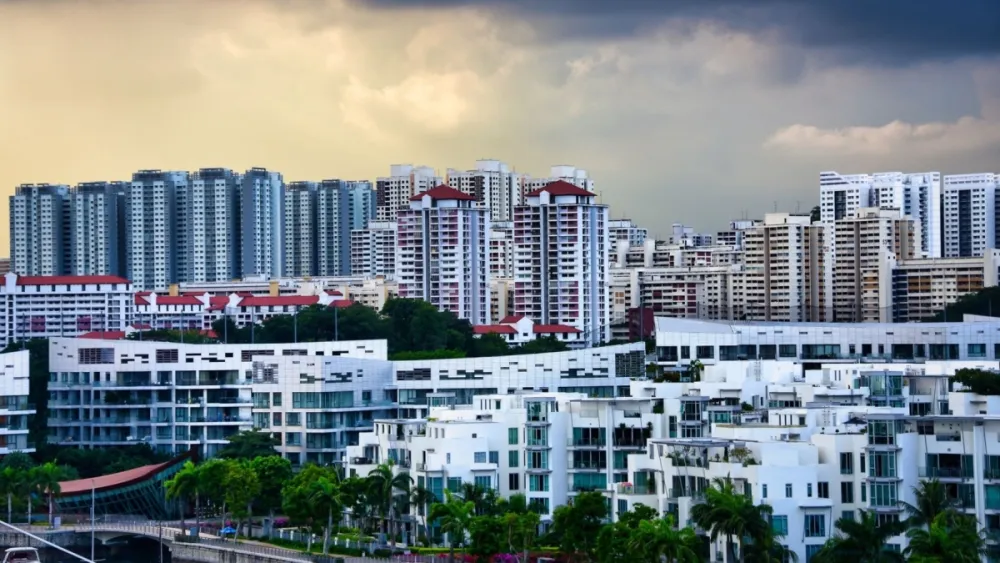
As the property market still reels from surprise cooling measures announced by the government early July, industry players are putting into question the move’s supposed benefits, viability and timing as companies and developers bear the brunt of the fallout.
The government raised the Additional Buyers Stamp Duty (ABSD) rates by 5ppt for individuals and 10ppt for entities whilst tightening Loan-to-Value (LTV) limits by 5pt in its ninth round of property cooling initiatives since 2009. The trigger came after private home prices rose 9.1% over the past year and transaction volumes ballooned on the back of heated demand.
The rationale was that if property prices maintained their heated uptrend and continue to outpace income growth, households may assume more leverage than they can manage, pushing up the risk of a destabilising correction later on, real estate consultant JLL said in a report.
However, some market watchers are calling the government intervention premature as a mere 9.1% price increase after home prices have trailed behind incomes for the past four years do not necessarily merit a cooling measure of that magnitude.
The Real Estate Developers Association of Singapore (Redas) raised its concern after claiming that there is no clear motivation behind the property curbs as sales transaction volumes remain within market expectation.
"The property market should be allowed time to find its own course and reach a sustained equilibrium," Redas said in a statement. "Developers are concerned about the distortionary effects of such market behaviour over the medium and long term.”
The cumulative average income growth in the last five years has hit over 15% whilst home prices are 3% lower. “Singapore’s home price to income ratio of 4.8 years is much lower than the estimated 7.3 years in 2010 and it seems safe to allow market forces to act,” the real estate firm added.
Even without intervention, Singapore’s runaway home prices are still likely to have slowed as a growing amount of residential supply is expected to be released by the second half of the year from en-bloc sale sites. Around 28,000 units could be launched for sale over the next 12 months, JLL forecasted.
With the ABSD for developers eyeing to snap up private residential properties for development hiked from 15% to 25%, developers and investors may be discouraged from further participation in the property market. In fact, the move has already resulted in losses for companies like City Development and UOL who have witnessed their stocks fall by more than 14% after the surprise announcement.
Also read: Can Keppel take the latest blow on its property segment?
“It is difficult to comprehend how raising this tax from 15% to 25% can help the property market. The 15% contingent tax is already effective in ensuring developers do not hoard land and provide supply into the market,” JLL noted in its report.
By hiking the ABSD to 25% despite a slowdown in investment appetite, developers may even hold back on undertaking larger projects with over 100 units.
“In our view, this seems counter-intuitive as larger residential developments generally provide for a more pleasant and conducive environment with more shared facilities and services that require some minimum scale.”
Also read: Chart of the Day: See how the last 2 property curbs dampened home sales
Moreover, the use of taxes to cool the property market may not necessarily be an effective regulatory tool over the long term especially if prices are suppressed enough to meet income requirements.
“As real estate investment carries a larger portion of debt and more than other investment classes, controlling LTV limits and maintaining a cap on total debt servicing ratio are more effective and sustainable than increasing additional buyer stamp duties, in our view. Compared to stamp duties, these debt inhibitors create less friction and reduce the overall risk in the property market. ” observed JLL.
The property curbs has not even spared banks from the fallout as they face dismal lending prospects in the coming quarters from weaker mortgage business. Housing loans constitute the largest portion of Singapore bank lending with UOB's property exposure estimated at 27.9%, OCBC at 27.6% and DBS at 21.4%.
JLL suggests that the government’s intervention ultimately serves to confirm its commitment to making even private home ownership in Singapore a reality for its citizens despite the existence of subsidised homes that already fulfil this function.
“Private housing seems to now be treated as a social good rather than an investment asset, even though c.75% of housing stock in Singapore is public housing which is already highly regulated and affordable.”



![SBR 5 Lorem Ipsum News 2 [8 May]](https://cmg-qa.s3.ap-southeast-1.amazonaws.com/s3fs-public/styles/exclusive_featured_article/public/2025-05/a_hand_pointing_to_a_futuristic_technology_5b87c9d0e3_3.png.webp?itok=M3Hf-9XR)
![SBR 4 Lorem Ipsum [8 May Top Stories]](https://cmg-qa.s3.ap-southeast-1.amazonaws.com/s3fs-public/styles/exclusive_featured_article/public/2025-05/a_hand_pointing_to_a_futuristic_technology_5b87c9d0e3_2.png.webp?itok=2m5Wl0MX)


![Exclusive three SBR 12 Lorem Ipsum [8 May]](https://cmg-qa.s3.ap-southeast-1.amazonaws.com/s3fs-public/styles/exclusive_featured_article/public/2025-05/a_hand_pointing_to_a_futuristic_technology_5b87c9d0e3_11.png.webp?itok=8kn_UIfA)
![Video [Event News]](https://cmg-qa.s3.ap-southeast-1.amazonaws.com/s3fs-public/styles/event_news_featured_article/public/2025-05/screenshot-2025-05-08-at-4.58.53-pm_0.png.webp?itok=Kud35sMs)
![Event News SBR 9 Lorem Ipsum [8 may]](https://cmg-qa.s3.ap-southeast-1.amazonaws.com/s3fs-public/styles/event_news_thumbnail/public/2025-05/a_hand_pointing_to_a_futuristic_technology_5b87c9d0e3_8.png.webp?itok=DTh_dbYp)
![Event News SBR 9 Lorem Ipsum [8 May]](https://cmg-qa.s3.ap-southeast-1.amazonaws.com/s3fs-public/styles/event_news_thumbnail/public/2025-05/a_hand_pointing_to_a_futuristic_technology_5b87c9d0e3_7.png.webp?itok=vzDAzb6V)
![Event News SBR 8 Lorem Ipsum [8 May]](https://cmg-qa.s3.ap-southeast-1.amazonaws.com/s3fs-public/styles/event_news_thumbnail/public/2025-05/a_hand_pointing_to_a_futuristic_technology_5b87c9d0e3_6.png.webp?itok=jvHFc4P6)


![Video [Event News]](https://cmg-qa.s3.ap-southeast-1.amazonaws.com/s3fs-public/styles/video_thumbnail/public/2025-05/screenshot-2025-05-08-at-4.58.53-pm_0.png.webp?VersionId=D7oD2WQTBYjWvOm6.BdwTAjm0dNCr7Kl&itok=yZnI0YBb)













 Read Here
 Advertise
 Sign Up