What to expect in 2016 as Singapore economy hits slowest growth since 2009
GDP is seen to likely remain stuck in the 2-3% yoy range.
The 4Q15 GDP growth flash estimate was a breathtaking +2.0% yoy (+5.7% qoq saar), which beat market consensus forecast marked a sweet end to 2015. OCBC Bank notes that the surprise factor came from construction which doubled to 2.2% yoy (+7.0% qoq saar) in its strongest showing since 2Q15 due to public sector construction activities, and supported by the still resilient services sector which expanded 3.2% yoy (+6.5% qoq saar) in 4Q15 on the back of wholesale & retail trade and finance & insurance sectors. Manufacturing remained the main drag, contracting for the 5th straight quarter and actually deteriorating further from the 5.9% decline in 3Q15 to -6.0% in 4Q15.
But 2015 GDP growth is still the lowest since 2009’s -0.6% performance.
The 4Q2015 GDP figure brought the full year growth to 2.1% which is close to the official growth forecast of “close to 2 percent” but is nevertheless a moderation from the 2.9% growth registered in 2014.
Here's what analysts had to say:
Selina Ling, analyst, OCBC Treasury Research
Notably, this data set reinforced that growth has likely stabilized since 3Q15 after avoiding a technical recession earlier in the year. The 2015 outperformer remained services which accelerated from 3.2% growth in 2014 to 3.6% last year, followed by construction at 1.1% (2014: 3.0%), whereas the 4.8% drop in manufacturing was the worst since 2001 (-11.6%).
Looking ahead, 2016 growth will likely remain stuck in the 2-3% yoy range.
Headline GDP growth may not deviate from the 2+% yoy range in the near-term. We expect that manufacturing may continue to be in the doldrums and shrink 0.2% yoy in 1Q16 and constrain overall GDP growth to 2.4% yoy. Note the latest SME business surveys suggest greater caution for the first half of this year. Our full-year 2016 GDP growth forecast remains at 2-3%, which is at the upper end of the official 1-3% forecast. The downside risks remain the ongoing deceleration and policy risks in China, as well as the sustained US monetary policy normalization (given market perception continues to differ significantly from the median dots graph). It is interesting that the two-track growth trajectory in China, with the service PMI outperforming the manufacturing PMI, heralds a trend towards servitization that could be also apparent for the rest of the region.
Inflation could remain subdued in 2016, with core inflation picking up slightly. Headline CPI prints may stay deflationary in 1H16 but edge back to positive territory before the year is out. That said, headline CPI inflation may remain flat in 2016 as asset price deflation in housing (especially with private residential prices having fallen for nine straight quarters and official rhetoric hinting at no lifting of cooling measures in the near-term) and private road transport sustains, and the pass-through from the tight labour market into the broader cost environment has been fairly limited. Given the benign crude oil price environment, the CPI basket components that would contribute positively to inflation are likely to be food (due to La Nina), healthcare and education costs. At this juncture, we do not see any game-changers that warrant a third monetary policy easing this year as the 4Q15 flash GDP growth estimate is “water under the bridge” so to speak.
Policy settings will remain within comfort zones for now. The 3-month SIBOR has been relatively stable post-Oct15 MPS, but the SOR have tracked higher as the US FOMC initiated lift-off with a 25bp rate hike to 0.5% in mid-Dec15. The spread between the 3-month SOR-SIBOR has widened to more than 50bps, which is the largest since March 2009, but we anticipate that the gap will narrow to around 30bps as the SIBOR plays catch-up to SOR. Our end-2016 forecasts for 3-month SIBOR and SOR are 2.03% and 2.05% respectively, assuming that the FOMC continues to hike at a benign pace of 100bps next year.
Francis Tan, analyst, UOB
The main support in 4Q came from the robust services sector which grew 3.2% y/y, as the wholesale & retail trade and finance & insurance sectors maintained healthy growth paths. The construction sector also expanded 2.2% y/y, compared to the 1.1% y/y growth in 3Q.
Singapore’s manufacturing engine remained weak as the sector contracted for the fifth consecutive quarter to register a decline of 6.0% y/y due to the decline in output from the electronics, transport engineering and precision engineering clusters.
Although Singapore’s manufacturing sector is not out of the doldrums yet, we remain optimistic that there could be some pickup in manufacturing growth in2016 and we are projecting the manufacturing sector to grow by a modest 2.5%, compared to the 4.8% decline in 2015.
The services sector will continue to be a bright spot, although growth for 2016 may slow to 2.7%, from 3.6% in 2015. This is due to the higher base effects for the wholesale & retail trade to hurdle past; While the finance & insurance sector may grow at a slower pace, resulting from the US interest rate normalization that could impact on the overall loans demand in 2016.
With this, we maintain our forecast for Singapore’s 2016 GDP to grow 2.7%.
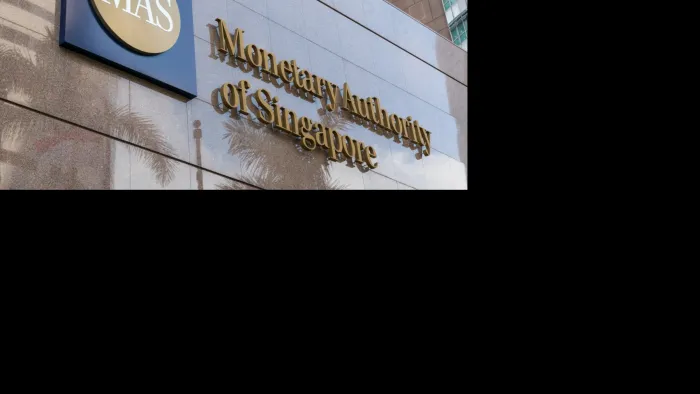
Regarding monetary policy, we hold to our view that the Monetary Authority of Singapore (MAS) will likely leave the current policy of the “modest and gradual appreciation” of the SGD NEER unchanged at our estimated 0.5% pa rate.
The monetary policy divergence between the US and Singapore will likely see the USD/SGD continue on a weaker path to reach 1.46/USD by the middle of this year. However, the increased trade and investment flows from a stronger US economy will probably see a direction reversal by 2H 2016, where we forecast the USD/SGD to end 2016 at 1.42/USD.


![SBR 5 Lorem Ipsum News 2 [8 May]](https://cmg-qa.s3.ap-southeast-1.amazonaws.com/s3fs-public/styles/exclusive_featured_article/public/2025-05/a_hand_pointing_to_a_futuristic_technology_5b87c9d0e3_3.png.webp?itok=M3Hf-9XR)
![SBR 4 Lorem Ipsum [8 May Top Stories]](https://cmg-qa.s3.ap-southeast-1.amazonaws.com/s3fs-public/styles/exclusive_featured_article/public/2025-05/a_hand_pointing_to_a_futuristic_technology_5b87c9d0e3_2.png.webp?itok=2m5Wl0MX)


![Exclusive three SBR 12 Lorem Ipsum [8 May]](https://cmg-qa.s3.ap-southeast-1.amazonaws.com/s3fs-public/styles/exclusive_featured_article/public/2025-05/a_hand_pointing_to_a_futuristic_technology_5b87c9d0e3_11.png.webp?itok=8kn_UIfA)
![Video [Event News]](https://cmg-qa.s3.ap-southeast-1.amazonaws.com/s3fs-public/styles/event_news_featured_article/public/2025-05/screenshot-2025-05-08-at-4.58.53-pm_0.png.webp?itok=Kud35sMs)
![Event News SBR 9 Lorem Ipsum [8 may]](https://cmg-qa.s3.ap-southeast-1.amazonaws.com/s3fs-public/styles/event_news_thumbnail/public/2025-05/a_hand_pointing_to_a_futuristic_technology_5b87c9d0e3_8.png.webp?itok=DTh_dbYp)
![Event News SBR 9 Lorem Ipsum [8 May]](https://cmg-qa.s3.ap-southeast-1.amazonaws.com/s3fs-public/styles/event_news_thumbnail/public/2025-05/a_hand_pointing_to_a_futuristic_technology_5b87c9d0e3_7.png.webp?itok=vzDAzb6V)
![Event News SBR 8 Lorem Ipsum [8 May]](https://cmg-qa.s3.ap-southeast-1.amazonaws.com/s3fs-public/styles/event_news_thumbnail/public/2025-05/a_hand_pointing_to_a_futuristic_technology_5b87c9d0e3_6.png.webp?itok=jvHFc4P6)


![Video [Event News]](https://cmg-qa.s3.ap-southeast-1.amazonaws.com/s3fs-public/styles/video_thumbnail/public/2025-05/screenshot-2025-05-08-at-4.58.53-pm_0.png.webp?VersionId=D7oD2WQTBYjWvOm6.BdwTAjm0dNCr7Kl&itok=yZnI0YBb)














 Read Here
 Advertise
 Sign Up