
Three lessons for ASEAN's Smart Cities Network
By Leslie OngTo mark the end of Singapore’s ASEAN chairmanship in November 2018, Prime Minister Lee handed Thailand’s Prime Minister, Prayut Chan-o-cha, a wooden gavel and the Thai premier thanked Singapore for "efficiently driving forward a resilient and innovative ASEAN community". So what can the community learn from Singapore after a decade?
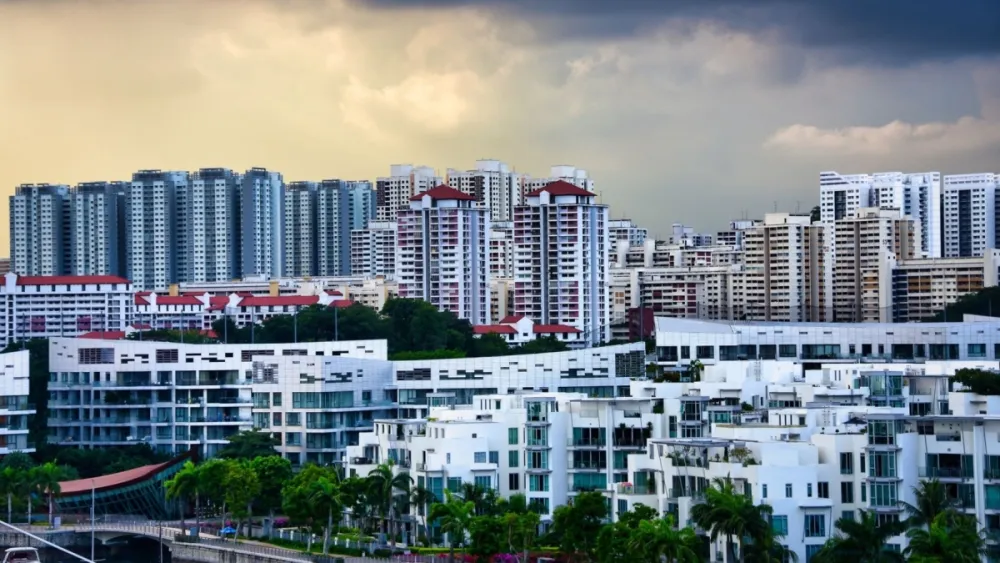
During the chairmanship, Singapore addressed how digital solutions can relieve the pressures of rapid urbanisation – a mega trend that is most prevalent in ASEAN. With 90 million more people within ASEAN expected to urbanise by 2030, cities will drive most of our region’s growth. In light of this unrelenting demographic trend, governments are looking for ways to cope with the mounting pressure on their cities.
Singapore has made significant progress towards achieving its smart nation vision – from improving citizens’ quality of life, to the ease of doing business in the country. Singapore continues to play a role model for the evolving nations in the region, demonstrating how technological and innovative solutions can make our cities more liveable and sustainable.
People first
The first lesson is not centred on technology, but around people. A city’s workforce will ultimately be responsible for rolling out smart city measures and keeping it running, so it is vital that the workforce is equipped to handle a highly-digitised future.
A prime example of this is the field of data analytics, which is changing the way organisations operate. For instance, modern businesses like GOJEK and Redmart know that data leads to better decision making and have spread the use of data across all departments and at all levels. It is no longer just data specialists who need data skills, the future of work is one where all knowledge workers will need the skills necessary for interpreting and making sense of data.
Recognising this digital trend, in 2018 the Singapore government launched the Digital Government Blueprint, which includes a commitment to train 20,000 public servants with data skills, as well as making sure all have basic digital literacy skills. For the government, this means a digitally-confident workforce harnessing technology to allow the creation of stakeholder services which better serve its people and businesses.
Aligned with this, Singapore is also helping industries transform digitally and re-skill workers to prep them for a digital future. Industry Transformation Maps (ITMs) implement a framework for partnership of companies, trade associations and chambers (TACs), workers, unions, economic agencies and education institutions, to develop and implement a transformation plan for all industries. The ITMs sharpen the competitiveness of industries, and to enable workers to widen their skills.
Rapid regulation
The next lesson involves the rarely-linked themes of regulation and innovation. The former being a set of rules designed to make people act in a certain way, the latter being something which makes us do things differently.
Regulation is undeniably an essential facet of society, especially where technology is concerned, but regulation – or regulators – can often be too rigid. This can lead innovation being stifled. Staying with the example of the way data is being used, the volume of data being produced today is exploding and only set to increase.
When matched with big data analytics, we have an unprecedented opportunity to innovate across a raft of industries, creating new business opportunities, speeding up processes and reducing costs. To help organisations take advantage of these opportunities – and ensure regulation does not get in the way of innovation – the Singapore government proposed an amendment to the Copyright Act that would make it legal to copy text and data for the purpose of data analysis, so long as the user had lawful access to that data.
Such innovative use of data is vital for a smart city, and this is just one example of how regulation keeping pace with innovation can help a country push towards its smart city goals. This harnessing of data also leads to another lesson, which looks at how Singapore has used data across its agencies to make an impact.
From data source to decision making
A prime example of this comes from Singapore’s Urban Redevelopment Authority (URA), which uses data from sources ranging from public transport numbers to face-to-face surveys to paint a picture of how Singaporeans are living. By analysing trends and patterns, they can plan innovative solutions to accommodate Singapore’s growth whilst considering factors like future immigration, economic growth and climate change.
For example, to meet the challenge of overcrowding on public transport, the URA is working with a start-up, Urban Engines, using EZ-link data to plan better transport. Using sophisticated algorithms and anonymised EZ-link data, planners can map the origin and destination of commuter trips made via public transport. With this knowledge, planners can see commuter patterns and choices of transport, understand difficulties and constraints, and identify areas for improvement. In short, data allows agencies to make informed decisions based on facts rather than conjecture.
Back when it began its ASEAN Chairmanship in 2008, Singapore chose the themes of ‘resilience’ and ‘innovation’ because, according to PM Lee, “We wanted to build up our collective defences against challenges, and to use technology to better prepare ASEAN for the future”. The ASCN is a fitting legacy to that intention and Singapore will likely continue to lead the way. If ASEAN’s members continue to collaborate, take heed of lessons and learn from one another, we will be better able to navigate the challenges on our smart city journeys.



![SBR 5 Lorem Ipsum News 2 [8 May]](https://cmg-qa.s3.ap-southeast-1.amazonaws.com/s3fs-public/styles/exclusive_featured_article/public/2025-05/a_hand_pointing_to_a_futuristic_technology_5b87c9d0e3_3.png.webp?itok=M3Hf-9XR)
![SBR 4 Lorem Ipsum [8 May Top Stories]](https://cmg-qa.s3.ap-southeast-1.amazonaws.com/s3fs-public/styles/exclusive_featured_article/public/2025-05/a_hand_pointing_to_a_futuristic_technology_5b87c9d0e3_2.png.webp?itok=2m5Wl0MX)


![Exclusive three SBR 12 Lorem Ipsum [8 May]](https://cmg-qa.s3.ap-southeast-1.amazonaws.com/s3fs-public/styles/exclusive_featured_article/public/2025-05/a_hand_pointing_to_a_futuristic_technology_5b87c9d0e3_11.png.webp?itok=8kn_UIfA)
![Video [Event News]](https://cmg-qa.s3.ap-southeast-1.amazonaws.com/s3fs-public/styles/event_news_featured_article/public/2025-05/screenshot-2025-05-08-at-4.58.53-pm_0.png.webp?itok=Kud35sMs)
![Event News SBR 9 Lorem Ipsum [8 may]](https://cmg-qa.s3.ap-southeast-1.amazonaws.com/s3fs-public/styles/event_news_thumbnail/public/2025-05/a_hand_pointing_to_a_futuristic_technology_5b87c9d0e3_8.png.webp?itok=DTh_dbYp)
![Event News SBR 9 Lorem Ipsum [8 May]](https://cmg-qa.s3.ap-southeast-1.amazonaws.com/s3fs-public/styles/event_news_thumbnail/public/2025-05/a_hand_pointing_to_a_futuristic_technology_5b87c9d0e3_7.png.webp?itok=vzDAzb6V)
![Event News SBR 8 Lorem Ipsum [8 May]](https://cmg-qa.s3.ap-southeast-1.amazonaws.com/s3fs-public/styles/event_news_thumbnail/public/2025-05/a_hand_pointing_to_a_futuristic_technology_5b87c9d0e3_6.png.webp?itok=jvHFc4P6)


![Video [Event News]](https://cmg-qa.s3.ap-southeast-1.amazonaws.com/s3fs-public/styles/video_thumbnail/public/2025-05/screenshot-2025-05-08-at-4.58.53-pm_0.png.webp?VersionId=D7oD2WQTBYjWvOm6.BdwTAjm0dNCr7Kl&itok=yZnI0YBb)













 Read Here
 Advertise
 Sign Up