How Budget 2013 will make Singapore an international financial and maritime centre
By Chee Fang ThengSingapore’s Budget 2013 was announced on 25 February 2013. The key message for businesses is the emphasis on ‘quality growth’. Underpinning this key message is that Singapore will continue its course of encouraging and attracting foreign investments. This is important, as Singapore’s key business sectors are dominated by MNCs and global companies which are highly mobile and operate internationally, and are increasingly developing local talent. This is essential to the continuation of Singapore’s successful strategy as a competitive hub bridging Asia with America, Europe and the West.
Singapore already has one of the lowest corporate tax rates in Asia at 17%. There are also partial exemptions which may bring the effective tax rate to 8.36% or 5.67% for the first $300,000 of income. Budget 2013 does not change the corporate tax rate, and introduces a corporate tax rebate of 30% capped at $15,000 for three years from years of assessment 2013 to 2015.
The existing production and innovation credits (PIC), which was introduced to encourage production and innovation, and is also available to foreign businesses establishing themselves in Singapore, allow for tax deductions of 400% on up to $400,000 in expenditure for each of the six PIC qualifying activities, or a cash payout of 60% on up to $100,000 of the qualifying expenditure. 2013 Budget announced a bonus to the PIC scheme to further encourage businesses in undertaking improvement in productivity and innovation. Active businesses that spend a minimum of $5,000 in qualifying PIC investments will receive a dollar-for-dollar matching cash bonus, up to $15,000 from years of assessment 2013 to 2015.
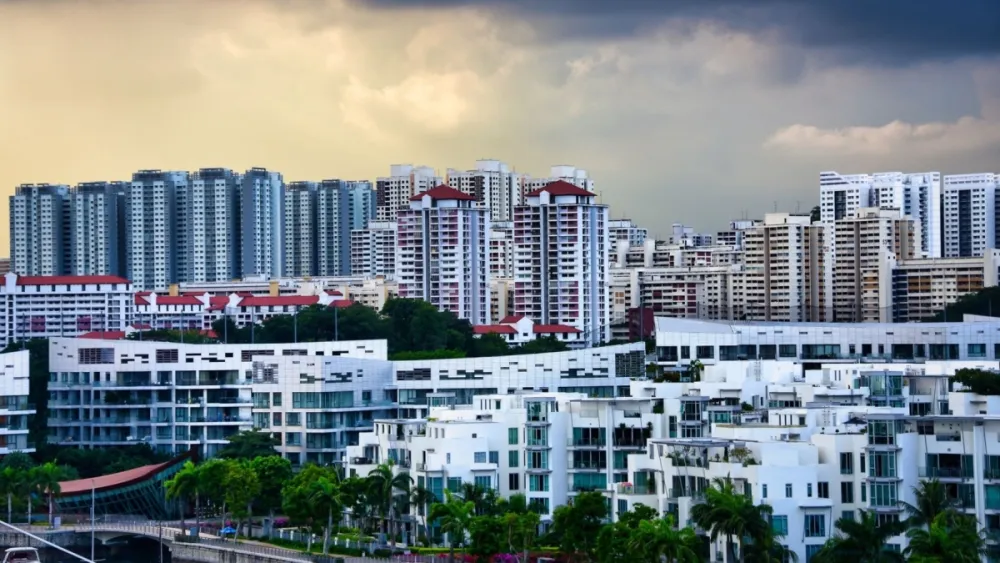
The financial and maritime sectors, which are two key sectors of the Singapore economy which are heavily dependent on foreign investments, also saw their incentive schemes renewed in addition to further boosts. We believe that this Budget strengthens Singapore’s position as an international financial and maritime centre, crucially at a time when numerous financial and shipping companies are reviewing their international location options, given the pressures from their home markets which continue to be deeply affected by the global financial crisis.
Global Financial Centre
The existing financial sector incentive (FSI) scheme comprises 12 separate awards granting concessionary tax rates of 5%, 10% or 12% on income from qualifying financial activities, which was due to expire on 31 December 2013. The FSI scheme will be streamlined and extended for a further 5 years to 31 December 2018. Existing award recipients will continue their awards until the end of their tenures.
International Maritime Centre
Singapore has an extensive double-tax treaty network following the OECD model, providing for full or partial exemption of tax on shipping profits.
The main incentive schemes for the maritime sector are:
Full exemption for shipping profits of Singapore-flagged vessels;
Full exemption for shipping profits of foreign-flagged vessels under the MSI-AIS (approved international shipping enterprise) incentive awarded by the Maritime Port Authority;
Full exemption for the asset-owning enterprise and concessionary tax rate to the manager under the MSI-ML (maritime leasing) incentive, which includes both ships as well as containers; and
Concessionary tax rates on the incremental income of shipping-related support services.
The 2013 Budget enhances the MSI-AIS incentive, by increasing the maximum tenure of the tax exemption from 30 years to 40 years.
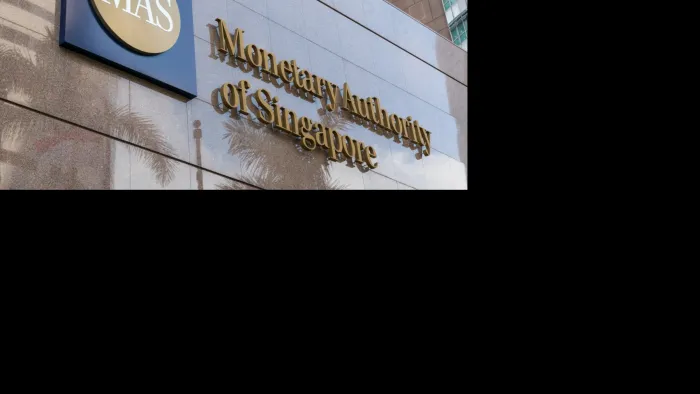
Overall, this Budget seeks to achieve a balance of sending a message to foreign businesses and international corporations that Singapore will remain an attractive destination, as this is viewed as a fundamental means of ultimately achieving benefits for the government and Singaporeans.


![SBR 5 Lorem Ipsum News 2 [8 May]](https://cmg-qa.s3.ap-southeast-1.amazonaws.com/s3fs-public/styles/exclusive_featured_article/public/2025-05/a_hand_pointing_to_a_futuristic_technology_5b87c9d0e3_3.png.webp?itok=M3Hf-9XR)
![SBR 4 Lorem Ipsum [8 May Top Stories]](https://cmg-qa.s3.ap-southeast-1.amazonaws.com/s3fs-public/styles/exclusive_featured_article/public/2025-05/a_hand_pointing_to_a_futuristic_technology_5b87c9d0e3_2.png.webp?itok=2m5Wl0MX)


![Exclusive three SBR 12 Lorem Ipsum [8 May]](https://cmg-qa.s3.ap-southeast-1.amazonaws.com/s3fs-public/styles/exclusive_featured_article/public/2025-05/a_hand_pointing_to_a_futuristic_technology_5b87c9d0e3_11.png.webp?itok=8kn_UIfA)
![Video [Event News]](https://cmg-qa.s3.ap-southeast-1.amazonaws.com/s3fs-public/styles/event_news_featured_article/public/2025-05/screenshot-2025-05-08-at-4.58.53-pm_0.png.webp?itok=Kud35sMs)
![Event News SBR 9 Lorem Ipsum [8 may]](https://cmg-qa.s3.ap-southeast-1.amazonaws.com/s3fs-public/styles/event_news_thumbnail/public/2025-05/a_hand_pointing_to_a_futuristic_technology_5b87c9d0e3_8.png.webp?itok=DTh_dbYp)
![Event News SBR 9 Lorem Ipsum [8 May]](https://cmg-qa.s3.ap-southeast-1.amazonaws.com/s3fs-public/styles/event_news_thumbnail/public/2025-05/a_hand_pointing_to_a_futuristic_technology_5b87c9d0e3_7.png.webp?itok=vzDAzb6V)
![Event News SBR 8 Lorem Ipsum [8 May]](https://cmg-qa.s3.ap-southeast-1.amazonaws.com/s3fs-public/styles/event_news_thumbnail/public/2025-05/a_hand_pointing_to_a_futuristic_technology_5b87c9d0e3_6.png.webp?itok=jvHFc4P6)


![Video [Event News]](https://cmg-qa.s3.ap-southeast-1.amazonaws.com/s3fs-public/styles/video_thumbnail/public/2025-05/screenshot-2025-05-08-at-4.58.53-pm_0.png.webp?VersionId=D7oD2WQTBYjWvOm6.BdwTAjm0dNCr7Kl&itok=yZnI0YBb)














 Read Here
 Advertise
 Sign Up