Asia Pacific office property markets headed for growth
Raffles Place rents up 2.9% in second quarter while CBD core area vacancy rate dropped 7%.
The outlook for the property market is continuing improvement across Asia Pacific, underpinned by stronger economic conditions and business confidence, reports Jones Lang LaSalle. Take up of office space continues to strengthen and capital values have started to recover, while the momentary pause in investment activity will not last long.
In 2Q10, take up of office space across Asia Pacific’s Tier I cities increased by 13% q-o-q to 1.3 million sqm. In the major financial centres, contractions in space came to an end with the exception of Tokyo.
Jones Lang LaSalle’s recently released Office Rental Weather Map and Asia Pacific Property Digest both reflect relocation and upgrading demand continuing to underpin the bulk of leasing activity, though there have been more instances of expansion in markets such as Hong Kong, Singapore and the Tier I cities of China and India.
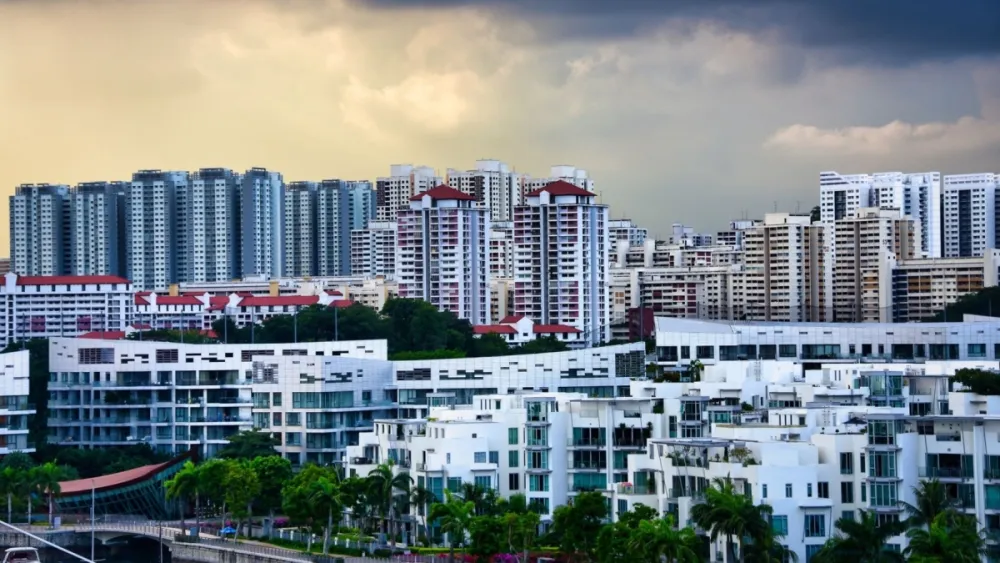
In 2Q10, net effective rents in Singapore increased for the first time since 3Q08. In Raffles Place, rents increased 2.9% q-on-q. The vacancy rate in the CBD core area decreased significantly in 2Q10 to about 7% from over 9% in 1Q10.
Rents in Greater China strengthened further, led by Hong Kong and Shanghai. In Australia, rents have started to recover in a few markets, notably Melbourne CBD where net effective rents have increased by 9.6% in the first half of the year.
Alastair Hughes, Chief Executive Officer for Jones Lang LaSalle in Asia Pacific says, “The underlying rental fundamentals in most Asia Pacific markets are compelling and we have seen the net absorption of quality office space increase by 13% compared to Q1.”
“The majority of businesses are moving in order to consolidate their operations and to pick up good quality space at a good time in their rental cycle. This steady demand is relentlessly soaking up the supply of office space,” adds Mr Hughes.
Dr Jane Murray, Head of Research, Asia Pacific comments, “Rents are nearing or past the trough in most regional markets with residual declines in a few centres. With hiring activity now resuming in many markets, expansion demand is expected to strengthen as occupiers position for future growth.”
“Looking forward, Hong Kong, Shanghai and Singapore are likely to lead the recovery across the region, with rental increases of between 10% and 30% in 2010. Growth momentum is expected to pick up in Tokyo and some Indian markets starting 2011,” notes Dr Murray.
Chris Archibold, Head of Markets, Singapore commented “While vacancy is expected to see some increase in Singapore in 2011 due to the amount of supply coming on stream, this will be mitigated by around 1 million sq ft of supply being withdrawn from the market for redevelopment to either residential or commercial.
“Also we have seen increased activity on the pre-leasing front, with the following buildings either let or under offer to the tune of Asia Square Tower 1 – 40%, Ocean Financial Centre - 70%, 50 Collyer Quay – 60% and MBFC Phase 1 – fully let.
“Should the economic recovery remain on track, a steady level of demand is likely to be seen, which should support moderate rental growth and further activity within these developments over the next 12 months,” Mr Archibold added.
Investment activity in Asia Pacific was more subdued in 2Q10 for a variety of reasons, including concerns about the impact of tightening measures by China and the lack of large portfolio deals that were a feature of the previous quarter. Direct commercial property transaction volumes for Asia Pacific amounted to USD16 billion, a decline of 32% q-o-q. However, overall volumes were still up by 24% on a y-o-y basis.
“With further improvements in market fundamentals, a renewed uptick in investor activity is expected in 2H10, and transaction volumes are expected to increase by around 30% for the full year compared with 2009,” says Dr Murray.
Although there is still a degree of uncertainty regarding the economic and financial backdrop, Jones Lang LaSalle expects property markets in Asia Pacific to record further improvement in fundamentals and activity levels over the rest of 2010.
“Regional economic growth is on track to be significantly higher this year than the recent historical average. Following growth of 1.6% in 2009, the Asia Pacific economy is forecast to expand by 6.5% this year compared to global growth of just 3.8%,” says Dr Murray.



![SBR 5 Lorem Ipsum News 2 [8 May]](https://cmg-qa.s3.ap-southeast-1.amazonaws.com/s3fs-public/styles/exclusive_featured_article/public/2025-05/a_hand_pointing_to_a_futuristic_technology_5b87c9d0e3_3.png.webp?itok=M3Hf-9XR)
![SBR 4 Lorem Ipsum [8 May Top Stories]](https://cmg-qa.s3.ap-southeast-1.amazonaws.com/s3fs-public/styles/exclusive_featured_article/public/2025-05/a_hand_pointing_to_a_futuristic_technology_5b87c9d0e3_2.png.webp?itok=2m5Wl0MX)


![Exclusive three SBR 12 Lorem Ipsum [8 May]](https://cmg-qa.s3.ap-southeast-1.amazonaws.com/s3fs-public/styles/exclusive_featured_article/public/2025-05/a_hand_pointing_to_a_futuristic_technology_5b87c9d0e3_11.png.webp?itok=8kn_UIfA)
![Video [Event News]](https://cmg-qa.s3.ap-southeast-1.amazonaws.com/s3fs-public/styles/event_news_featured_article/public/2025-05/screenshot-2025-05-08-at-4.58.53-pm_0.png.webp?itok=Kud35sMs)
![Event News SBR 9 Lorem Ipsum [8 may]](https://cmg-qa.s3.ap-southeast-1.amazonaws.com/s3fs-public/styles/event_news_thumbnail/public/2025-05/a_hand_pointing_to_a_futuristic_technology_5b87c9d0e3_8.png.webp?itok=DTh_dbYp)
![Event News SBR 9 Lorem Ipsum [8 May]](https://cmg-qa.s3.ap-southeast-1.amazonaws.com/s3fs-public/styles/event_news_thumbnail/public/2025-05/a_hand_pointing_to_a_futuristic_technology_5b87c9d0e3_7.png.webp?itok=vzDAzb6V)
![Event News SBR 8 Lorem Ipsum [8 May]](https://cmg-qa.s3.ap-southeast-1.amazonaws.com/s3fs-public/styles/event_news_thumbnail/public/2025-05/a_hand_pointing_to_a_futuristic_technology_5b87c9d0e3_6.png.webp?itok=jvHFc4P6)


![Video [Event News]](https://cmg-qa.s3.ap-southeast-1.amazonaws.com/s3fs-public/styles/video_thumbnail/public/2025-05/screenshot-2025-05-08-at-4.58.53-pm_0.png.webp?VersionId=D7oD2WQTBYjWvOm6.BdwTAjm0dNCr7Kl&itok=yZnI0YBb)













 Read Here
 Advertise
 Sign Up