
How to face the hurdles in Singapore's construction industry
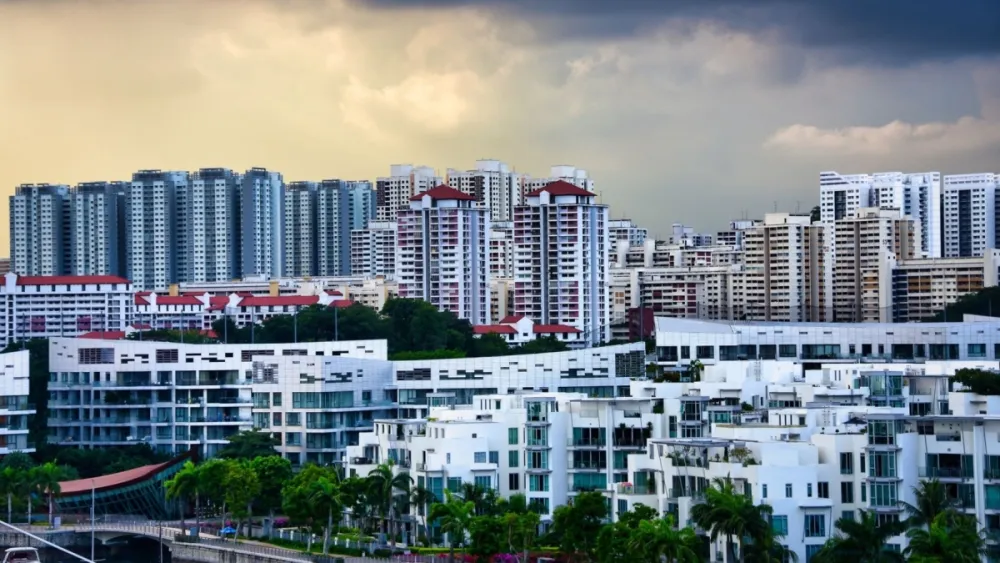
By Won-Joon LeeThe significant amount of volatility, in Singapore’s construction industry’s output and contracts awarded in the last decade, reflects the sector’s cyclical nature and exposure to the wider economy.
The industry’s relative importance has declined, from 5.3 per cent of total GDP in 2001 to 3.9 per cent last year, even though output has grown in absolute terms to S$12.8 billion in 2011.
Public sector projects play a substantial role in the industry, accounting for 46 per cent of all contracts last year. Going forward, large infrastructural projects such as the new Thomson MRT Line, Changi Airport’s Terminal Four and HDB’s accelerated construction of public housing will support the output of the industry.
Meeting the challenges
With a progressive reduction in man year entitlements since 2010, and an impending rise in foreign worker levies in January next year, construction companies who have long been dependent on foreign workers to keep costs low must now raise their productivity.
Productivity currently stands at an estimated 30 per cent across the industry, half that of the US, and a third of Japan’s, giving significant scope for improvement. The Building and Construction Authority (BCA) recognises this and has set out new targets, to achieve 20 to 30 per cent productivity improvements by 2020.
Low hanging fruits that can be quickly harnessed include making greater use of prefabricated concrete and dry walls. Prefabrication reduces manual labour, creating cleaner site conditions and enhances safety standards, as traditional on-site construction activities are shifted off-site to a controlled factory environment.
Drywalls can be built up in half the time of brick walls, and the scope for expansion in its use is large, as less than 15 per cent of all residential projects use it today.
Computing tools such as Building Information Modelling (BIM), used to digitally simulate building performance, enables design conflicts to be resolved upfront avoiding costly re-work during construction. With only 39 per cent of construction firms having adopted BIM in Singapore, there is room for growth.
Using environmentally friendly building materials, energy conservation technologies and incorporating green features in building design can help construction companies differentiate themselves as green warriors and promote a socially conscious corporate image.
In the same way, adopting universal design elements in their design of spaces to support the country’s rapidly ageing population will better meet the needs of the community.
By sending its workers for training to create multi-skilled tradesman, firms will be able to more flexibly deploy their workers and even reduce the number of workers needed. Workers satisfying BCA’s skills assessment as ‘higher skilled workers’ will face lower foreign worker levies. More experienced and better-trained workers are also more productive.
Strategies for Success
At Accenture, we have seen leading global construction players take strategic steps to secure preferred positions in high-growth emerging markets. They have diversified their portfolios up- and down-stream, transforming from pure builders into general, project management contractors, and concession companies, who manage and maintain facilities after completion.
These high performers are characterised by a high degree of integration, having industrialised their construction procedures and processes, and leveraging Lean Six Sigma to ensure efficiency across the value chain.
They have improved their risk management and financial performance modelling capabilities, and streamlined their logistics and supply chain, adopting an efficient operating model. Leveraging IT analytics, they source and obtain better pricing for raw materials.
The best practices from these high performers can be useful pointers for Singapore-based construction companies, as they race to create a sustainable growth trajectory, and enhance the depth and breadth of their capabilities.



![SBR 5 Lorem Ipsum News 2 [8 May]](https://cmg-qa.s3.ap-southeast-1.amazonaws.com/s3fs-public/styles/exclusive_featured_article/public/2025-05/a_hand_pointing_to_a_futuristic_technology_5b87c9d0e3_3.png.webp?itok=M3Hf-9XR)
![SBR 4 Lorem Ipsum [8 May Top Stories]](https://cmg-qa.s3.ap-southeast-1.amazonaws.com/s3fs-public/styles/exclusive_featured_article/public/2025-05/a_hand_pointing_to_a_futuristic_technology_5b87c9d0e3_2.png.webp?itok=2m5Wl0MX)


![Exclusive three SBR 12 Lorem Ipsum [8 May]](https://cmg-qa.s3.ap-southeast-1.amazonaws.com/s3fs-public/styles/exclusive_featured_article/public/2025-05/a_hand_pointing_to_a_futuristic_technology_5b87c9d0e3_11.png.webp?itok=8kn_UIfA)
![Video [Event News]](https://cmg-qa.s3.ap-southeast-1.amazonaws.com/s3fs-public/styles/event_news_featured_article/public/2025-05/screenshot-2025-05-08-at-4.58.53-pm_0.png.webp?itok=Kud35sMs)
![Event News SBR 9 Lorem Ipsum [8 may]](https://cmg-qa.s3.ap-southeast-1.amazonaws.com/s3fs-public/styles/event_news_thumbnail/public/2025-05/a_hand_pointing_to_a_futuristic_technology_5b87c9d0e3_8.png.webp?itok=DTh_dbYp)
![Event News SBR 9 Lorem Ipsum [8 May]](https://cmg-qa.s3.ap-southeast-1.amazonaws.com/s3fs-public/styles/event_news_thumbnail/public/2025-05/a_hand_pointing_to_a_futuristic_technology_5b87c9d0e3_7.png.webp?itok=vzDAzb6V)
![Event News SBR 8 Lorem Ipsum [8 May]](https://cmg-qa.s3.ap-southeast-1.amazonaws.com/s3fs-public/styles/event_news_thumbnail/public/2025-05/a_hand_pointing_to_a_futuristic_technology_5b87c9d0e3_6.png.webp?itok=jvHFc4P6)


![Video [Event News]](https://cmg-qa.s3.ap-southeast-1.amazonaws.com/s3fs-public/styles/video_thumbnail/public/2025-05/screenshot-2025-05-08-at-4.58.53-pm_0.png.webp?VersionId=D7oD2WQTBYjWvOm6.BdwTAjm0dNCr7Kl&itok=yZnI0YBb)













 Read Here
 Advertise
 Sign Up